top of page

bLOG

Search

Do you like podcasts?


I've an on/off relationship with them, but do like a listen either in the car or when doing manual work in my shed or garden.

But, I have to tell you about a superb podcast episode I listened to just recently.


ree

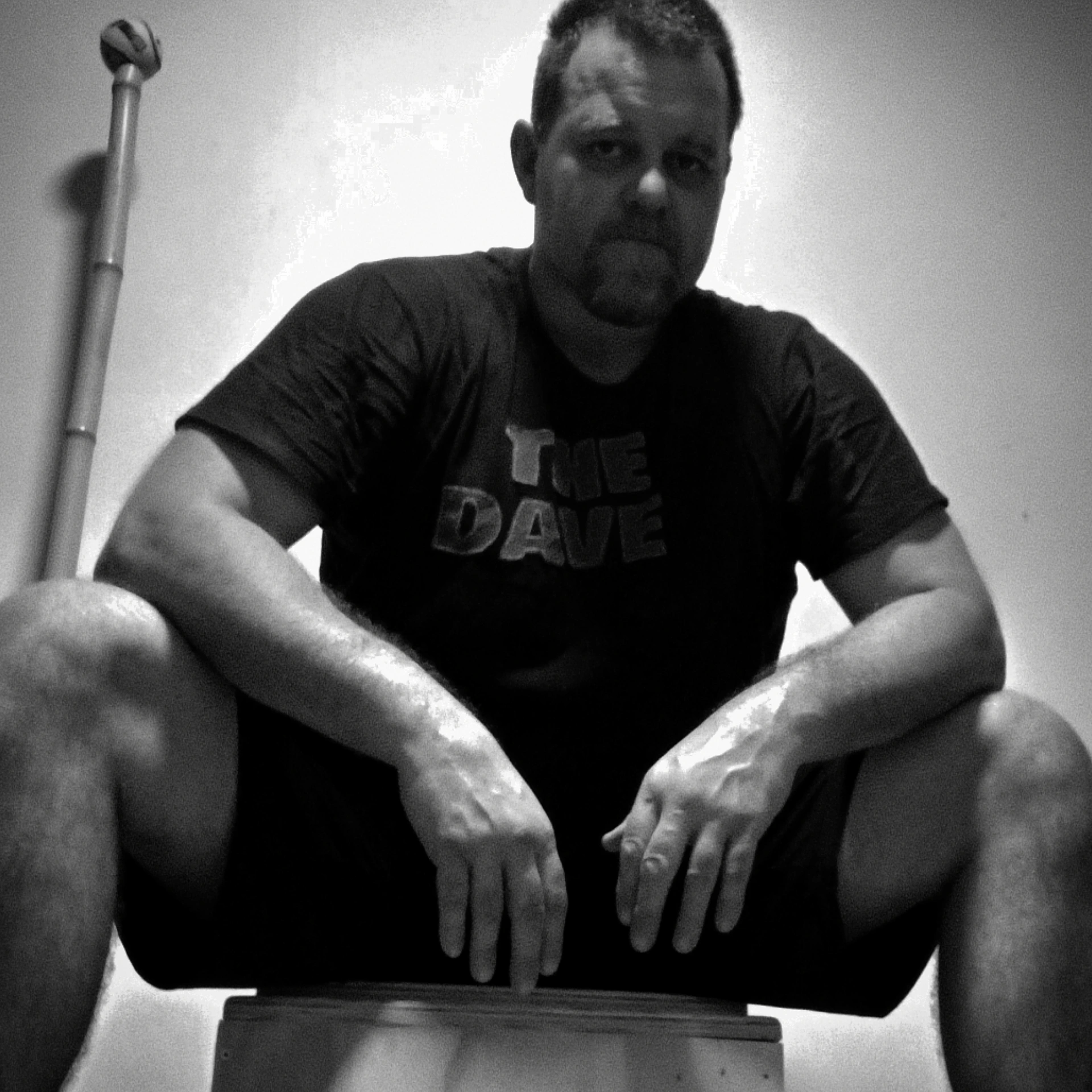
It features a really smart dude you may have heard of, goes by Dave, occasionally "The Dave" and from time to time "that prick!"


So, you may have guessed it, I was interviewed recently on a podcast, you can listen to it here:


We talk about my background, some of my philosophies and more.


Monica, the host, did a great job as I'm not known for being particularly chatty, but she drew me out.

There was a question she asked though that I maybe didn't answer too well, so lets have a pop here.


We talked about how in my early years I took on karate as an identity and how every task I undertook became Karate.

If I ran, it was to be better at karate

If I lifted weights, it was to be better at karate

Pretty much anything I did was karate.

It was my identity


And Monica asked a smart question, she asked if become so attached to something is a problem in itself.


This is precisely what happens with so many of the injured athletes that come to me.

They get big injury and all of a suddent they see their own mortality, the thing they love, the person they are is in danger of dying off!

So my job is to get them back into the game and do so while also getting and keeping their head right.


But what about my own personal journey?

Yes, the year I blew my back out, twice, and pretty much lost the use of my lower body, it took about 6 months to regain my squat, longerto be out of pain, was how I transitioned from a martial artist to a coach.


But, even as a coach and therpaist, in my head it is still karate.


How?


This is the part I missed in the interview. Traditional martial arts, unlike most sports, including modern competitive martial arts, has a deep philosophical side.

This is portrayed most famously by Mr Miyagi in the Karate Kid movie and TV series franchise.


But if you grew up in the 80's as I did, you also had Master Chiun from Remo, you had Pei Mei from Kill Bill, you had Splinter from TMNT, Xian Chow from Kickboxer and many more.

And this was the goal.

Yes, be an arse kicking physical specimin, but also to eveolve into the wise old master.


With this path, injuries may have meant you had to slow down as the physical specimin, the Vann Damme character, but instead you could become the wise old master.

Something that I am still working towards becoming. I'm closing in on 50 and my beard is ever greyer, so maybe I'll get there.....


I guess my point is, in traditional martial arts there is always something bigger. It's not just about the next medal, the next PR.

It's not the time on the stopwatch or the distance covered.

That stuff matters, but athleticism, even without injury, will burn out. But you don't have to.


It's why I like asking people to have "Blue Sky" goals

Goals that you may never achieve, but simply having them and reviewing them from time to time is what keeps you on the path.

It's your bearing, the "destination" on you google maps, so that when you get distracted, side tracked, you can simply work to get back on that bearing, and you keep heading in the right direction.


Get over and have a listen, then let me know your thoughts.


Regards


Dave Hedges


The Importance of Core Strength


Over the weekend, I had the pleasure of visiting Galway as a guest of the remarkable Sarah Smith, owner of Galway Kettlebells. During my time there, I conducted a bodyweight training workshop.


Teaching this workshop is always a joy. Each time I run it, I am impressed by the level of questions that participants ask. However, this time, I received a particularly thought-provoking question.


A 17-year-old martial artist, a bright young lad who is relatively new to the fitness and strength conditioning world, asked me, “So why exactly is core strength so important?”


Typically, I am asked about how to develop core strength. This was the first time someone asked me the fundamental question: “Why?”


To answer this, we first need to agree on what exactly the “core” is. I personally use three definitions depending on the context.


Definition 1 – The Water Bottle Concept


This idea came to me while teaching a kettlebell seminar to a group one day. I asked the attendees, who were mainly young fitness instructors, for their opinions on how to define the “core.”


Needless to say, I received a lot of blank stares, followed by stumbling descriptions and a lot of pointing at the stomach. At that moment, I grabbed my water bottle and used it to illustrate a simple view of the core as a singular unit rather than a jumble of parts.


Here’s a brief overview of how the speech goes:


Water Bottle Concept

A plastic water bottle, even when empty, can support a good portion of my body weight without any issue. Assuming I can balance on it, it can support my entire body weight with some deformation occurring.


A sealed empty plastic bottle supporting a 10kg plate

A sealed empty plastic bottle supporting a 10kg plate


Now, if I put the tiniest hole in the bottle or simply unseal the lid, it will collapse under a fraction of that weight.


But if we remove the lid....

But if we remove the lid…


How does the sealed bottle hold me up while an open one collapses? After all, it is the same bottle made of the same thin plastic.


It’s the internal air pressure that supports my weight. The walls of plastic merely prevent the air from escaping, ensuring there is sufficient pressure to support me.


As soon as the air finds a way out, through a weak spot in the plastic, the bottle collapses. This is almost exactly how our abdomen works when we generate high levels of force.


The air pressure in the torso stiffens the body, allowing the hips and shoulders to use it as a platform to push from.


The water bottle analogy even helps us understand the anatomy:

  • The front side represents our Rectus Abdominis, or “6 pack.”

  • Directly opposite this on the back of the body is the Erector Spinae.

  • The sides represent our obliques.

  • The label illustrates the Transverse Abdominis nicely as it wraps around the bottle, albeit on the outside rather than the inside.

  • The base of the bottle is the Pelvic Floor.

  • The lid represents the Diaphragm.


When all these elements work together, we are strong. Individually, they are pretty much useless.


How Does This Help Us?


This analogy shows us how the core functions as a unit, stiffening to protect the body and transfer force from one end to another.


For our martial artist, this means that when his fist lands, the core stiffens so that the force is transferred not just into, but through his opponent, with minimal recoil reverberating back through himself.


punched_face_02

Definition 2 – From the Hips to the Shoulders


I don’t use this definition as much as the water bottle concept, but I find it useful for getting contact athletes and fighters to reconsider their training needs.


This definition is a simplified version of the next one that follows.


To illustrate this, I like to use two pens and an elastic band.


Put one pen through the band and hold it steady. Now, insert the other pen and start twisting. After a few twists, hold the top pen steady and release the bottom one. What happens?


That’s right, the bottom pen spins as the band unwinds. This is exactly how a Thai boxer throws a kick: wind the top so that the bottom whips around.


BOOM!

BOOM!


If the bottom pen represents our hip and the top pen represents our shoulder, then the band is our core.


What connects the hip to the shoulder? A whole host of muscles, including everything discussed in the water bottle concept, plus the Glutes, Lats, Rhomboids, Traps, and more.


When you observe a thrower, whether in shot put or baseball, you can see how they rotate their hips so the torso twists like our elastic band visual. As the torso reaches its maximum stretch, it snaps the shoulder through, whipping the arm out and propelling the ball at incredible speed toward the target.


Throwing Action

Every muscle involved in that stretch can be considered part of the core. It’s not just your abs; it’s the entire connection between the hips and shoulders.


Definition 3 – The Spine


This is the "real" core. It consists of 33 bones, 24 of which can articulate against the bones above and below them. The spine can flex, extend, and rotate, essentially moving in every plane. It also protects our spinal cord and serves as an anchor point for a vast amount of muscle.


spine

Let’s use throwing a punch as an example:


A punch starts from the ground. We extend our rear ankle and knee, which pushes our rear hip forward.


This all happens quickly, with each joint accelerating the next. Assuming our abdominal muscles have enough elasticity and strength, the hip turning while the shoulder remains stationary will torque the midsection. The spine will twist, causing many muscles that attach to it to either lengthen (stretch) or shorten (contract).


The spine then unwinds, releasing that stretch and literally slingshotting the shoulder forward, throwing out the arm and potentially knocking out the opponent.


If you remember nothing else from this, just remember the word “slingshotting.” I encourage you to use that word in a conversation today.


Drop me a comment letting me know how you get on.


The Role of the Spine in Strength Training


The flexion and extension of the spine in the sagittal plane (front to back) is used by strongmen and kettlebell lifters during presses and jerks to efficiently propel weight overhead with a whip-like action.


Combine forward flexion with rotation, and you have a tennis serve. Reverse it, and you have a suplex throw.


In essence, the spine is the core. Muscles are designed to move joints, and the spine has 24 articulating vertebrae, along with the sacroiliac joint, the atlas, and others.


That’s a lot of joints, all of which need to be controlled by muscular contraction.


Does the Core Need to Be Strong?


Absolutely! It also needs to be mobile or “elastic,” as I prefer to think of it.


So, don’t just focus on strength work; be sure to include some mobility work too.


I hope this provides some food for thought. I would love to hear your opinions on the topic. I’ll discuss strengthening the core in another post.


Regards,


I am returning to the Guiding Principles thread today.

Previously I have discussed 2 of the 5 guiding principles laid out by

Gary Ward many years ago when he was still developing his Anatomy in

Motion ideas.


We spoke about Rule 1: Muscles Lengthen Before They Contract here:


And Rule 2: Joints Act, Muscles React here:


So lets look at Rule 3: Everything Orbits Centre


And I am not going to lie, as I talk about this principle, I am going to

talk about the Joint Mobility Fundamentals Online Course I recently

launched in the hope that you may buy into it.

I may also mention how there's a second, larger Mobility course in

development that I will also want you to buy.


You have been warned.


So what does "Everything Orbits Around Centre" mean?


Long story short, we can come at this from a biomechanics perspective

or a philosophical perspective.

Biomechanical is simpler


And it goes like this:


Watch this slow mo gymnastics clip:


See how as the athlete spins in the air she rotates around a point in

the centre of her body?


Our bodies centre of mass sits more or less a couple of inches in front

of our spine approximately level with our L4 vertebra.

It varies according to individual body dimensions, but it's around there.


That's the body's centre that movement literally orbits when we're in space.


Taking it deeper, each joint then has it's own centre.

Limb.

Each movement.


And if we are looking at complex, athletic motion, we are looking at a

magic dance where we are shifting our centre of mass to achieve rapid

movement.

An easy example, is if you stand up right now with your feet close

together. Now rapidly move your head (safely!) over to one side, right

over, past the shoulder.


What happened?


Either you stepped your foot, which landed on the floor directly below

your head

Or, you shifted your hips out the other way


Or, you're currently picking yourself up off the floor....

Hopefully it's one of the former and not the latter.


How is this useful to us?


Well, when we are lifting weights, we are changing this centre of

balance. We now have to counterbalance that external load.

When we reach, bob, weave, flip, tumble we are changing our shape and

likely changing that centre of balance.


And when we become injured, we can shift that centre of balance to move

our mass away from the injury site.

And just as when we reach forward, we feel the muscle son the back

stretch and load, if we've shifted our weight away from, or into one

shape or another, we will load muscles whether we realise it or not.


And this is where we start seeing compensatory patterns and injuries

coming seemingly out of nowhere some months or years down the line.


And this is why we may tell you to do an exercise on one side but not the other.

I may tell you to do the same exercise on both sides, but concentrate on

the shoulder on this side, but the knee on that side.


What we are seeing is if we can bring the centre back to, well, the centre.


Now, individual joints all have their centre, and as a joint moves,

muscles that surround it, cross it, will lengthen or shorten accordingly.

And this is where the Joint Mobility Fundamentals comes in.


Told you there was a sales pitch coming...


Simple joint rotations, like many of did in P.E. classes back in the

day, like we did in our Karate or Judo warm ups. Old school

Callisthenics warm ups before the term became synonyms with the so

called "Bar Athletes"


These joint rotations take each joint through it's (current) fullest

range of motion.


And how do we find the centre of something?

We measure from the outside edge don't we?


Where is the middle, the centre of the screen you're reading this from?

Measure corner to corner, divide by 2 and there it is.


To find centre, you need to know where the edges are.

Joint rotations, as done in the Joint Mobility Fundamentals show you

where the edges lie and give the body the information it needs to

determine it's own centre.


Which is why we often see outsized results from people who practice

joint mobility frequently.


Their balance improves

Their flexibility improves

Their ability to demonstrate strength improves

Old injuries often feel better

Confidence in movement comes back


Now, get over to the Joint Mobility Fundamentals page and have a look


bottom of page
Trustpilot